
Fisetin: The Most Promising Natural Senolytic
Everything about fisetin: the senolytic flavonoid that clears zombie cells. Clinical evidence, mechanism, dosing protocol, best brands and comparison.
Senescent cells are the biological equivalent of employees who stop working but refuse to leave the office. and contaminate the environment while they're at it. These "zombie" cells accumulate with age, secrete an inflammatory cocktail (SASP) that damages neighboring cells, and accelerate the aging of entire tissues. Fisetin is the most potent natural compound identified to date for clearing them.
What Is Fisetin
Fisetin is a flavonoid in the flavonol group, found in small amounts in strawberries, apples, persimmons, onions, and cucumbers. It was identified as the most potent natural senolytic in a 2018 Mayo Clinic screening, when James Kirkland and Tamara Tchkonia's team tested 10 flavonoids on human senescent cells.
Fisetin eliminated over 50% of senescent cells in culture. more than quercetin, luteolin, curcumin, or any other flavonoid tested. This result catapulted it to the center of senolytic research.
What Are Senolytics?
Senolytics are compounds that selectively eliminate senescent cells. cells that have stopped dividing but resist apoptosis (programmed death). These cells:
- Secrete the SASP (senescence-associated secretory phenotype): IL-6, IL-8, TNF-α, MMP-3
- Cause chronic local and systemic inflammation
- Damage the extracellular matrix
- Corrupt neighboring healthy cells (paracrine effect)
- Accumulate in skin, joints, liver, lung, kidney with age
Removing them is like taking rotten fruit out of the bowl: the rest keeps better.
“Of all the flavonoids we tested, fisetin was by far the most potent and selective against senescent cells. Most notably, in old mice, two days of high doses were sufficient to significantly reduce senescent burden and inflammation biomarkers.”
Mechanism of Action
Selective Senolysis
Fisetin induces apoptosis in senescent cells through:
- BCL-2/BCL-XL inhibition. anti-apoptotic proteins that senescent cells use to resist death
- Caspase-3 activation. the final executor of apoptosis
- PI3K/AKT/mTOR inhibition. cell survival pathway
- NF-κB reduction. transcription factor that maintains SASP
Healthy cells are not significantly affected because they don't depend on BCL-2/BCL-XL for survival.
Other Effects
- Antioxidant. directly neutralizes ROS
- Anti-inflammatory. reduces NF-κB independently of the senolytic effect
- Neuroprotective. crosses the blood-brain barrier, protects neurons in Alzheimer's models
Scientific Evidence
Yousefzadeh et al., 2018 (EBioMedicine)
The key study. Old mice (equivalent to 75 human years) received high-dose fisetin for 5 consecutive days. Results:
- Reduction of senescent cells in multiple tissues
- Reduction of SASP in blood
- Improved kidney function
- 10% extension of median lifespan (even when starting treatment in old age)
- Improved coat, activity, and immune function
AFFIRM Trial (Mayo Clinic, ongoing)
The first human clinical trial with fisetin as a senolytic. Design: 20mg/kg for 2 consecutive days in patients with knee osteoarthritis. Preliminary results expected 2025-2026. This trial will determine whether the mouse effects translate to humans.
Important Limitation
Most evidence is preclinical (mice and cell cultures). The AFFIRM trial is the first in humans. Until results are published, fisetin as a human senolytic is promising but unconfirmed.
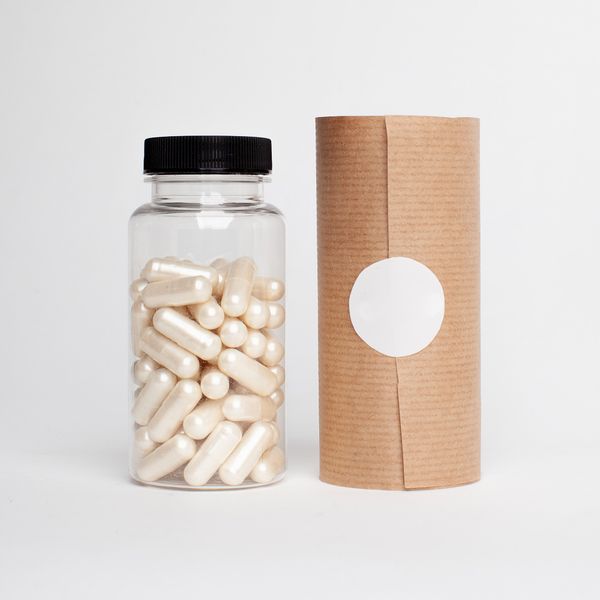
Doctor's Best Fisetin
Pure fisetin 100mg per capsule. Doctor's Best is an established brand with good quality control. The most accessible option for senolytic protocols.
Senolytic Protocol: "Hit and Run"
The senolytic approach isn't taking fisetin daily. The most widely used protocols in the longevity community follow the "hit and run" logic:
Standard Protocol (Kirkland/Mayo)
- Dose: 20mg/kg body weight (≈1400mg for 70kg/155lbs)
- Duration: 2 consecutive days
- Frequency: once per month
- With food: yes (fisetin is lipophilic, absorption improves with fat)
Why Not Daily?
- Senescent cells take weeks to reaccumulate. daily dosing isn't necessary
- High intermittent doses surpass the apoptotic threshold of senescent cells
- Low daily doses don't reach sufficient concentrations for senolysis
- Rest periods allow effect evaluation and minimize metabolic stress
Bioavailability Problem
Fisetin has very low oral bioavailability (~5%). Strategies to improve it:
- Take with fat (olive oil, avocado)
- Liposomal forms (few available)
- Life Extension Bio-Fisetin uses galactomannans to improve absorption (manufacturer claim, no independent validation)
Comparison
Senolytics: available options
| Precio |
Safety
- Well tolerated at the doses used in preclinical studies
- No long-term human safety data with senolytic protocol (high intermittent doses)
- Fisetin as a dietary flavonoid has a long safety track record
- Reported side effects: occasional mild gastrointestinal discomfort
Important caveat: high-dose senolytic protocols lack robust human safety data. This is an experimental intervention that healthy individuals undertake at their own risk.
“Fisetin is the natural senolytic with the most potential, but honestly: human evidence doesn't exist yet. If you decide to try it, use the intermittent 2-day/month protocol at 20mg/kg. It's an informed bet on solid preclinical science, not a validated intervention.”
Where to buy
Doctor's Best Fisetin 100mgAmazon Life Extension Bio-FisetinAmazon Quercetin 500mg (senolytic alternative)AmazonLas fuentes incluyen instituciones médicas, revistas peer-reviewed y organizaciones de investigación. Aevum no ofrece consejo médico.
Aevum Briefing
Every week: one protocol, one evidence analysis and what matters in longevity. No noise. Straight to your inbox.
Complete protocols, curated stacks and in-depth biomarker analysis.